


Case study · Seattle DOT
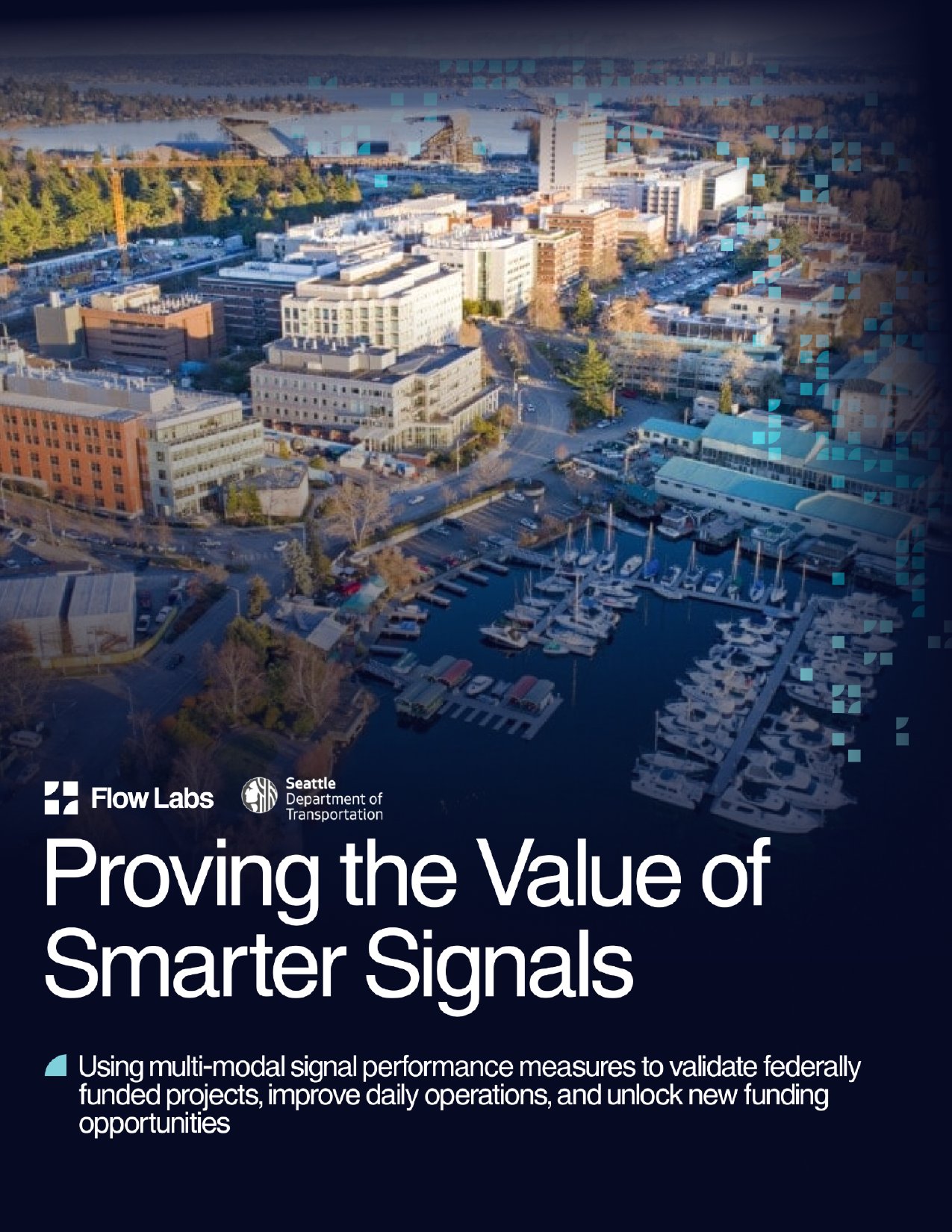
How Seattle DOT proved its federally funded signal upgrades worked
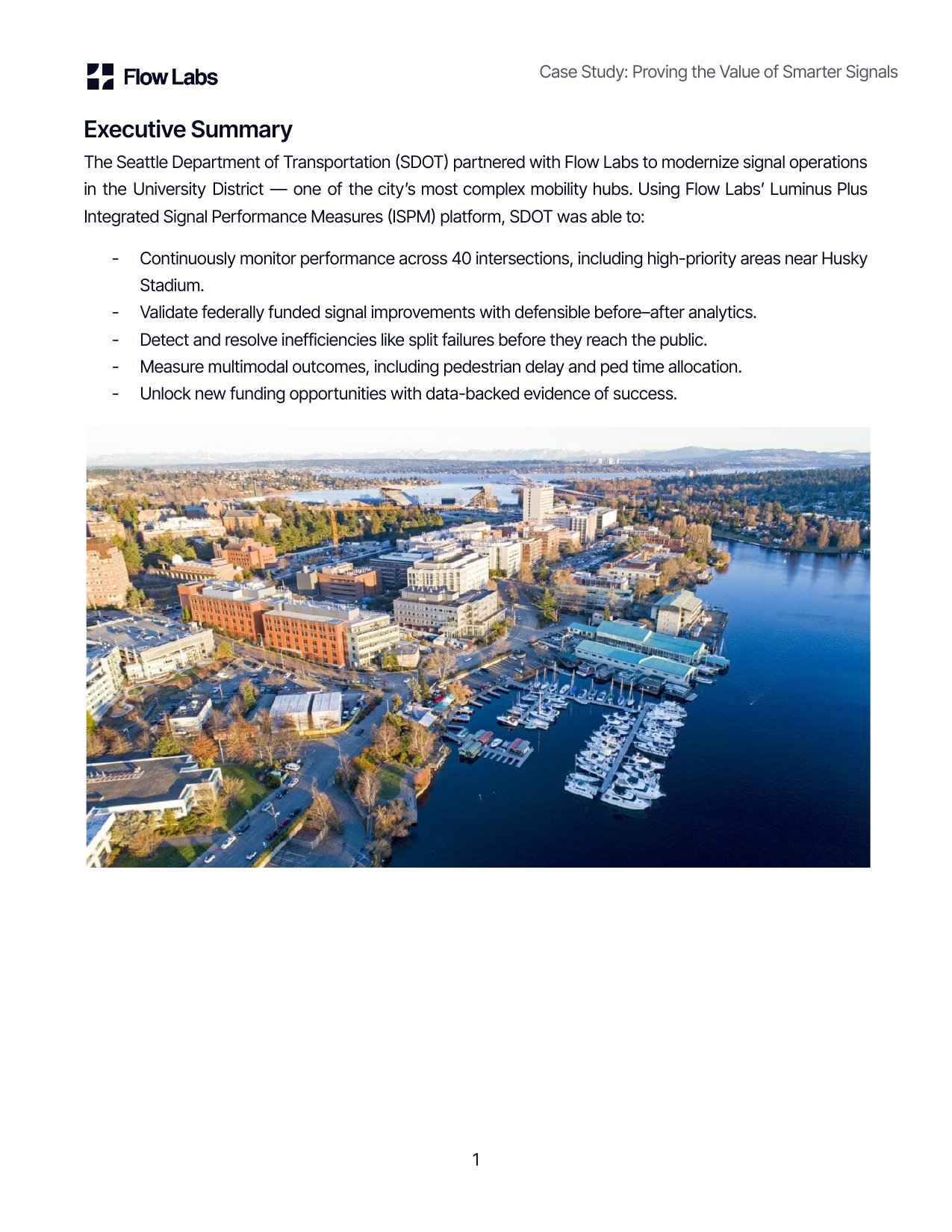
Seattle DOT had to show that its federally funded adaptive and multimodal upgrades in the University District delivered results. It used Flow Labs' Luminus Plus, which combines controller and probe data, to measure the district's signals before and after, with no new hardware.
- Flow Labs' before–after data became the backbone of Seattle DOT's official project evaluation, without manual studies.
- Continuous data replaced field visits, floating car runs and tube counters.
- One platform measured vehicle and pedestrian performance, including pedestrian delay and green time allocation, at conventional and adaptive intersections alike.
Get the full case study
Use your work email and we'll send the PDF to your inbox.
